
Serger vs Sewing Machine: What Each Does, and Sergers Compared
NeedleAndHoop is reader-supported. If you buy through our links we may earn a commission at no extra cost to you. As an Amazon Associate we earn from qualifying purchases. Disclosure.
A serger (also called an overlock machine) is a second machine, not a better first one. Here's what each does, according to university Extension guides.
What a serger does
- Stitch, trim and overcast in one step. Kentucky Extension says a serger does all three in one operation. Knives trim the edge as you sew; the lower blade is fixed and the upper blade moves.
- Speed. Kentucky Extension says a conventional sewing machine sews about 600 stitches per minute and a serger up to 1,700. The Brother 1034D, Brother ST4031HD and SINGER S0100 list up to 1,300.
- Loopers instead of a bobbin. New Mexico State Extension says loopers replace the bobbin. Sergers form interlocking looped stitches with one or two needles and loopers.
- Thread count. Kentucky Extension says sergers typically have 3, 4 or 5 threads. Kentucky calls the 3/4-thread machine the most versatile basic type. New Mexico State says the 3-thread stitch suits knits but shouldn't be used where a seam gets a lot of stress, while the 4-thread safety stitch can.
- Differential feed. Two sets of feed dogs moving at different speeds, which Kentucky calls essential for stretchy fabrics to control puckering and stretching. It can also gather.
What a serger can't replace
Kentucky Extension: you still need a sewing machine for zippers, buttonholes, topstitching and standard pressed-open seams. New Mexico State says sergers can be used for some applications like inserting a zipper, but agrees they don't replace a conventional machine. If you only have money for one machine, start with a sewing machine.
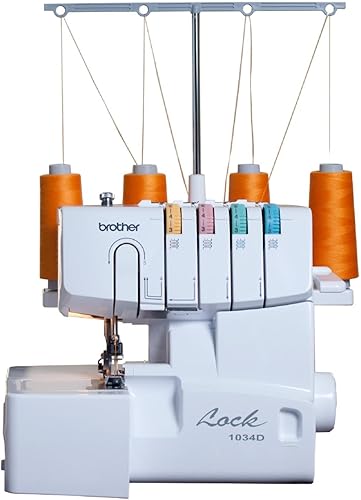
Brother 1034D
A 3- or 4-thread serger with a metal frame, up to 1,300 stitches per minute, color-coded upper thread guides and lower looper threading, and standard, gathering and blind stitch feet, per the listing. Brother's own product page lists differential feed and 4-thread overlock, 3-thread overlock, narrow hem, rolled hem and ribbon lock stitches.
Brother 1034D Serger
- 3- or 4-thread serger, up to 1,300 stitches per minute, per the listing
- Metal frame
- Color-coded upper thread guide and lower looper threading
- Standard, gathering and blind stitch feet included
Brother ST4031HD
Also 3-4 thread and 1,300 stitches per minute, with a metal frame, an extra-hard carbon steel blade, numbered thread guides and an extension table, per the listing.
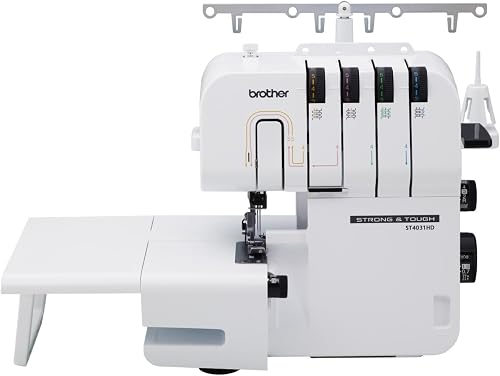
Brother ST4031HD Serger
- 3-4 thread serger, up to 1,300 stitches per minute, per the listing
- Metal frame; extra-hard carbon steel blade
- Color-coded, numbered thread guides
- Standard, blind stitch and gathering feet plus extension table
SINGER S0100 and S14-78
Both list 2, 3 or 4-thread stitches and differential feed. The S0100 lists 1,300 stitches per minute and arrives pre-threaded. The S14-78 lists rolled and narrow hems, a free arm under a removable table, and a two-thread looper converter.
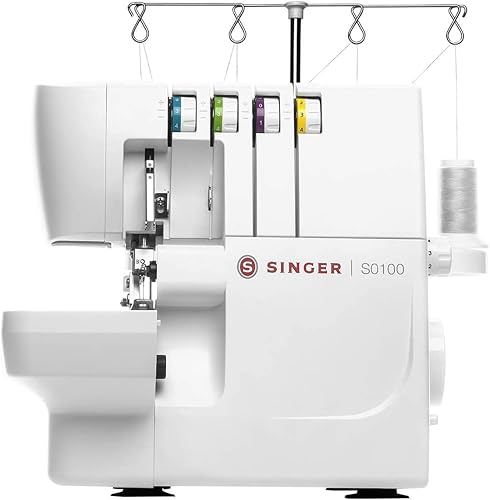
SINGER S0100 Serger
- 2, 3 or 4-thread stitches, per the listing
- Adjustable differential feed
- Up to 1,300 stitches per minute
- Arrives pre-threaded; color-coded threading
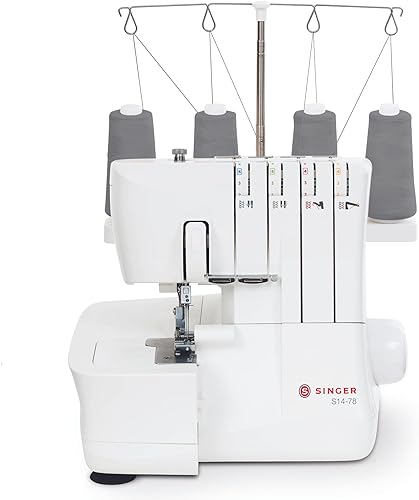
SINGER S14-78 Serger
- 2, 3 and 4-thread stitches; rolled and narrow hems, per the listing
- Differential feed
- Free arm under a removable extension table
- Two-thread looper converter included
Juki MO-50E
3 or 4 thread, with lay-in tensions, an automatic lower looper threader, adjustable differential feed, a built-in rolled hem and a retractable upper knife, per the listing. New Mexico State Extension notes the loopers are the hardest part of a serger to thread, so a looper threader is worth noticing.
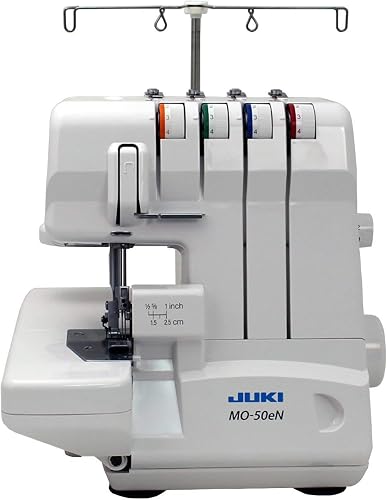
Juki MO-50E Serger
- 3- or 4-thread serger, per the listing
- Lay-in tensions; automatic lower looper threader
- Adjustable differential feed; built-in rolled hem
- Retractable upper knife
Thread and care
Sergers use cone thread; New Mexico State says cones hold more than 1,000 yards. These Maxi-Lock cones are 3,000 yards of spun polyester each, per the listing.
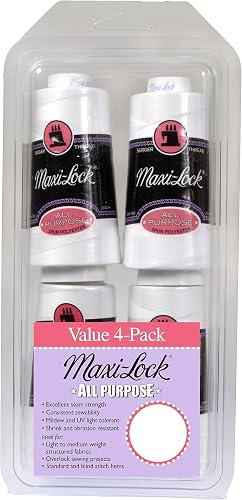
Maxi-Lock All-Purpose Serger Thread, 4 x 3,000 yd, White
- Four 3,000-yard cones of spun polyester, per the listing
- Listed for overlock sewing on light to medium fabrics
Care differs from a sewing machine. Brother's support page for its 3034D/4234D sergers says to oil moving parts once or twice a month for normal use (weekly with heavy use) and to clean lint off first. New Mexico State says to oil only where the manual says, avoid over-oiling, and change the knife blades when edges start to look ragged. See our oiling guide.
FAQ
Can a serger replace a sewing machine?
No, per Kentucky and New Mexico State Extension.
What does differential feed do?
Controls puckering and stretching on stretchy fabric, and can gather.
Do sergers need oil?
Some do. Brother's 3034D/4234D: once or twice a month. Check your manual.